Tahoe Unisex Heated Socks 4.0
Ororo
- Runtimelow11.5 hmedium6 hhigh3 h
- Battery7.4 V · 2000 mAh
- Heat levels3
The best balance of stated runtime and price in this comparison.
$124.99per manufacturer, Sep 30, 2026
Check price*
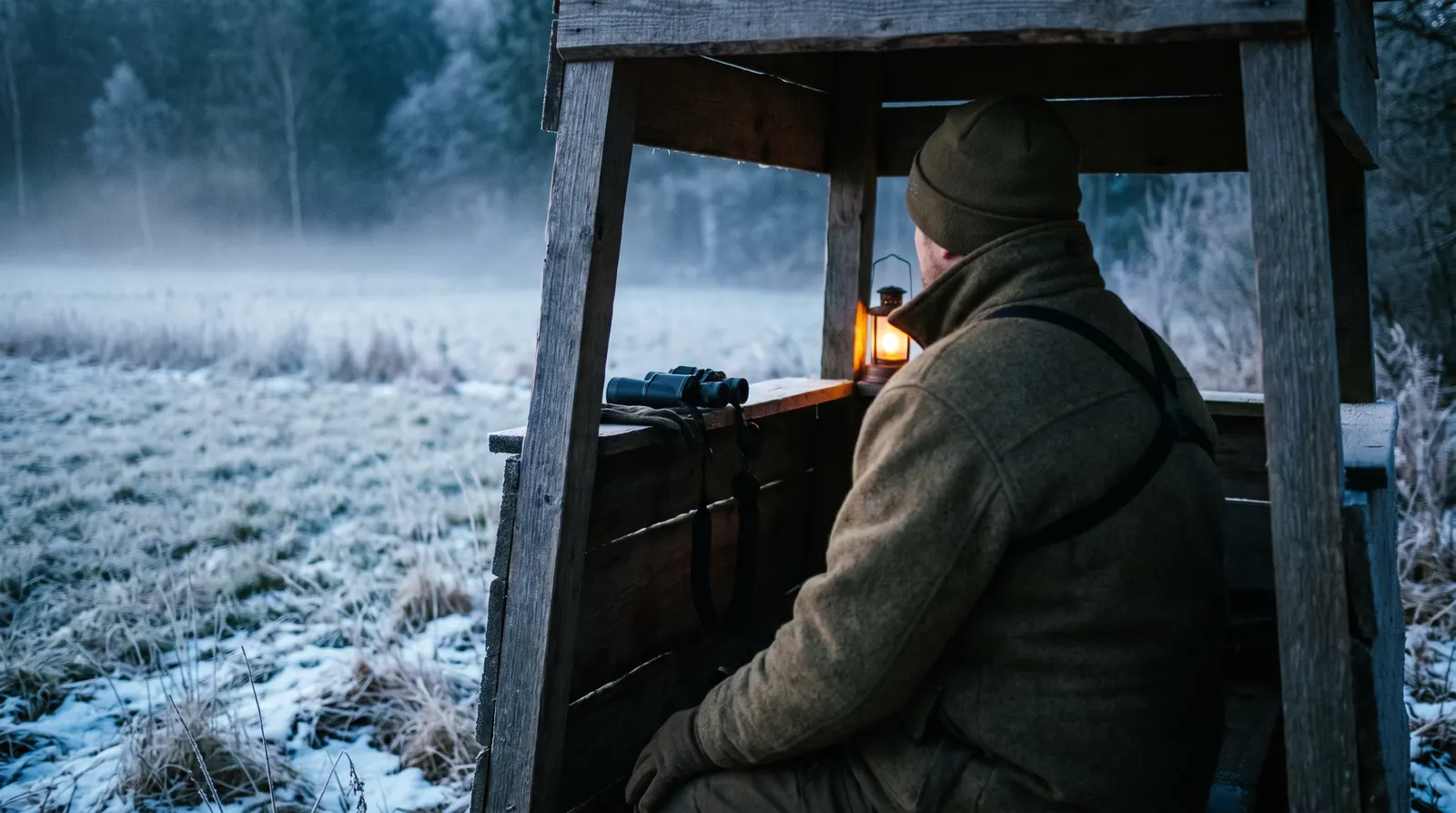
Hours of sitting still in freezing air – nowhere do you lose heat like in a stand or blind. Which heated gear matters there, how long the battery must last and what's available.
Updated September 30, 2026 · 6 models · manufacturer specs with sources only
Ororo
The best balance of stated runtime and price in this comparison.
Fieldsheer
The longest runtime the manufacturer states – for long days without recharging.
Savior Heat
Another documented option with a different focus.
Short answer: Heated hunting gear pays off in three places: your feet, your core and your hands. In a tree stand or ground blind, runtime matters more than peak heat. Plan around the medium setting and a battery that covers your whole sit. According to the manufacturers, the best heated socks last 6 to 8 hours on medium.
When you're walking in, your muscles make heat. Once you're settled in the stand, that stops. You sit still for hours, often from well before shooting light. Your body protects its core first. Hands and feet get less blood, and they go cold.
Three things make it worse in a stand:
More layers only go so far. Insulation traps heat, but it doesn't make any. That's the gap heated gear fills.
Every box advertises its longest runtime, and that's nearly always the lowest setting. On a frosty sit, you'll likely run medium. So plan with that number.
Here's what a five-hour morning sit looks like on medium, per the manufacturers:
The first four make it. With the last one, you'd need a spare pair of batteries. Cold also cuts the usable capacity of any lithium battery, so treat those numbers as a ceiling. Our heated clothing battery life guide shows how to estimate your own runtime.
Turn your socks on low during the walk in. That way you're not trying to heat up cold feet once you're already in the stand. Save high for short bursts, like when the wind picks up. The battery will still have something left for the last half hour of light.
Heating elements have no moving parts, so they run silently. The only noise comes from adjusting them. A wireless remote or app helps: you don't have to dig for a battery tucked into your sock cuff under your pants.
If you hunt mornings and evenings, the midday break often isn't long enough to recharge. G-Heat quotes 4 to 5 hours for the Outdoor V2, Fieldsheer the same for its merino socks. A second set of batteries is the safe bet for the season.
Feet are usually the first thing to go on a long sit, so this table lists every heated sock with the manufacturer's own figures. Sort by runtime to find the ones built for all-morning sits. For full buying advice, see our heated socks comparison.
| Model | Runtime (low/med/high) | Battery | Price |
|---|---|---|---|
| Fieldsheer Pro Merino Heated Socks Unisex Merino · Outdoor · App · Heating zone: Toes (top and bottom, dual heat zone) |
13 h 4 h |
3.7 V3600 mAh13.3 Whmax. 135 °F | $159.99
Check price*
|
| Savior Heat Magsnapic Charge Smart Heated Ski Socks (SOS811G3) Ski · App · Heating zone: All round (sole, toes, instep) |
13 h 8 h 5 h |
7.4 V2200 mAh16.3 Whmax. 149 °F | $219.99
Check price*
|
| Ororo Tahoe Unisex Heated Socks 4.0 Everyday · Heating zone: Front of sole + instep (two zones) |
11.5 h 6 h 3 h |
7.4 V2000 mAh14.8 Wh | $124.99
Check price*
|
| ActionHeat Pro Series+ Bluetooth Wool Heated Socks Hunting · Outdoor · App · Heating zone: Sole (entire underside) |
11 h 6 h 4.5 h |
n/amax. 151 °F | $199.99
Check price*
|
| Hotronic Heat Socks Set XLP 1S BT Surround Comfort EVO Ski · Merino · App · Heating zone: Toes (surround, wraps the toes) · other market |
10 h |
n/a | n/a
Check price*
|
| Glovii GQ3 heated socks with remote Everyday · Remote · Heating zone: Forefoot · other market |
6 h 3 h 2 h |
n/amax. 111 °F | n/a
Check price*
|
All values from the manufacturer's page, retrieved September 30, 2026. “n/a” = not stated by the manufacturer. Runtimes are usually quoted at room temperature. Models marked “other market” have no US dollar price listed.
This sock heats the entire underside of your foot – right where the cold comes up from the stand platform. ActionHeat rates it at up to 11, 6 and 4.5 hours. Two 2500 mAh batteries are included, and you can adjust the heat from the app. It sells for $199.99.
Savior Heat markets it as a ski sock, but the numbers suit the stand too. It's rated at up to 13 hours on low and 8 on medium – the longest medium figure in our comparison. Two 7.4 V, 2200 mAh batteries come with it. Price: $219.99.
At $129.99, the Tahoe is the budget pick with batteries included. Ororo rates it at 11.5, 6 and 3 hours. There's no remote or app, so you adjust it at the cuff. Ororo says it's US-only and can't be returned.
Socks alone rarely cut it in real cold. When your core stays warm, your body is less inclined to cut circulation to your hands and feet. That's why a heated vest often does more than a second pair of socks.
A heated hunting vest goes under the camo shell you already own, so your outer layer doesn't change. It doesn't rustle on the outside, and the heating panels sit close to your body, where the shell keeps the wind off them. Look for heat on the back first – in a ladder stand you're leaning against a cold seat back for hours. Then look at runtime on medium and whether you can reach the button through your jacket without unzipping it all the way.
For long sits, a few models stand out in our comparison:
If you already run Milwaukee M12 or Makita LXT tools, a tool-battery vest is worth a look. Makita rates its DCV202 at 20 hours on medium with an 18V 6.0Ah pack, enough for a morning and an evening sit without recharging. You carry a heavy battery, though, and neither brand lists a price on its own site. See all models on our heated vest page.
A heated hunting jacket replaces your outer layer, and that's the catch. Most hunters already own a quiet, scent-controlled camo jacket they trust. A heated jacket means giving that up or wearing two jackets. None of the jackets in our comparison is sold specifically as a hunting jacket, so we can't recommend one with verified hunting features like quiet face fabric or camo patterns.
A jacket does make sense in two cases. If your arms get cold, only a jacket helps – the ororo Overland, for example, heats the sleeves and a detachable hood, rated at 8.5 / 5 / 3 hours. And if you hunt from a heated blind or a pickup, where noise and camo matter less, a regular heated jacket works fine. Our heated jacket comparison has the full lineup.
Heated pants, heated boots and heated base layers exist, and hunters search for all three. We don't list any of them yet, because we don't have models with complete manufacturer specs. Here's what to look for if you shop for them anyway.
Your thighs and seat sit on a cold stand seat for hours. Heated pants usually put panels on the thighs or the lower back. Check where the battery pocket sits: on a stand seat you don't want a hard battery under you or pressing into your hip when you shift for a shot. A seat cushion under non-heated pants is the low-tech alternative.
Heated boots build the element into the boot, so the battery has to survive mud, snow and creek crossings. Look for a clear runtime on medium, a battery you can swap without taking the boot off, and a waterproof rating from the manufacturer. The more flexible option is heated insoles or heated socks in the boots you already own. Our heated insoles page compares insoles with their runtimes.
A heated base layer sits directly on your skin. That means the top setting should be mild, and you'll sweat into it first on the walk in, so switch it on only once you're settled. Base layers get washed often, so check the care instructions. For most hunters, a heated vest over a regular merino base layer is the simpler setup.
The tradeoff is clear: stay warm but still be able to shoot. Two approaches work:
A rechargeable hand warmer in a hand muff or jacket pocket is the simplest option. Ocoopa rates its UT4 Extreme at up to 18 hours in standard mode. Compare options on our heated gloves and rechargeable hand warmers pages.
There's no single answer, and we don't run hands-on tests in the field. Based on the manufacturer specs, three pieces do most of the work:
Start with whatever gets cold first. For most hunters, that's feet. Add a vest, and your hands and feet benefit too. Gloves or a hand warmer close the gap at the trigger.
The Warmth Finder shows which combination makes sense for your temperature and sit length.
Yes, for stand and blind hunting they're one of the most useful pieces. The vest goes under your hunting jacket, so you keep your camo and your quiet outer layer. It warms your core, which helps your hands and feet as well. Plan on a model that covers your whole sit on medium, or carry a spare battery.
Yes, within limits. The heating panels add real warmth to your back and chest, and some jackets heat the sleeves too. They don't replace insulation: a thin heated jacket stops being warm the moment the battery runs out. In real cold, runtimes on high drop to 2 to 4 hours per the manufacturers, so plan around medium.
For most hunters, heated socks, because feet get cold first. A heated vest warms your core, which indirectly helps your hands and feet. Gloves or a hand warmer round it out.
As long as your longest sit, counted on medium. For five hours, Savior Heat, Lenz, ActionHeat and Ororo all qualify on paper. If you hunt mornings and evenings, carry a spare set.
The heating elements themselves are silent because they have no moving parts. The only sound comes from adjusting the controls. A remote or app saves you from fumbling with the battery.
Yes. Lithium batteries deliver less usable capacity when they're cold. Treat the manufacturer's runtime as a best case and plan some reserve.
Socks usually warm the tops of your toes as well and add almost no bulk. Insoles fit any boot and target cold coming up from the platform. If your hunting boots have plenty of room, insoles can be the more comfortable choice.
Yes, that's what most vests are designed for. Your outer shell stays the same. Just make sure you can still reach the power button through your jacket.
* Links marked * are affiliate links. If you buy through them we may earn a commission at no extra cost to you. Placements can't be bought.