







Heated clothing: what it does and when it's worth it
Heated clothing has thin carbon-fiber or wire heating elements sewn in, powered by a small lithium battery. A button usually gives you three heat levels. The idea is simple – the differences hide in the details: Where exactly is the heating zone? How much energy does the battery hold? And how long does it last on the setting you actually need when it's 20 °F (−7 °C) outside?
Short answer: Heated clothing pays off most when you stay still or face wind for hours – in a tree stand, at a game, on a motorcycle, on a job site. Heat helps most at your hands and feet, because that's where your body cuts blood flow first when it gets cold. A heated vest warms your core, which indirectly helps your fingers too.
How heated clothing works
Every piece of heated gear has three parts: a heating element, a controller and a battery pack. The element is a flat mesh of carbon fiber or fine wire, placed where you lose heat fastest – your back, chest, collar, hand pockets, fingers or toes. Run current through it and it warms up. It's the same physics as an electric blanket, just thinner and running on low voltage.
The controller is usually a single button with a colored light that shows the heat level. On socks and insoles it sits on the battery, often backed up by a remote or a phone app. Some brands go finer than three levels: Fieldsheer offers four settings from 90 to 135 °F (32–57 °C), and ActionHeat lists up to 150 °F (66 °C) on its Pro Series+ high setting. Those numbers describe the heating element, not the air inside your jacket.
The battery supplies the power. Gloves and socks typically run on 7.4V packs. Vests and jackets use 7.4V packs, USB power banks or, for work brands, the same 12V or 18V/20V batteries that run your drill.
One thing heated clothing can't do is insulate. The element makes heat; your layers hold it. A heated vest under a thin rain shell loses warmth fast in the wind. Under a puffy or a fleece, it stays where you need it.
Which body zone first?
In the cold, your body protects your organs. It narrows the blood vessels in your hands and feet so less heat escapes. That's why fingers and toes go numb while the rest of you still feels fine. It gives you a simple order of priority:
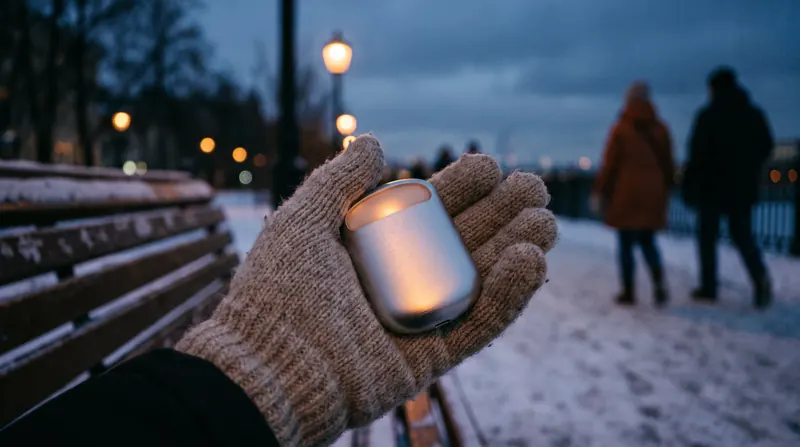
- Hands: Heated gloves work directly – if the heat reaches your fingertips. For occasional cold, a rechargeable hand warmer in your pocket may be all you need.
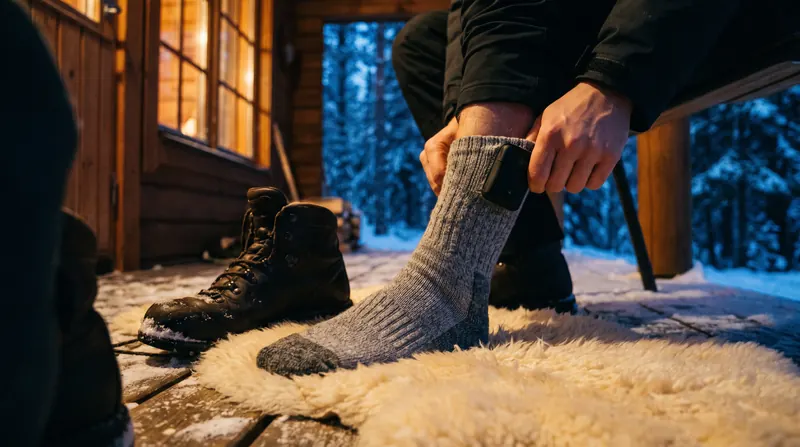
- Feet: Heated socks warm your toes; heated insoles fit the boots you already own.
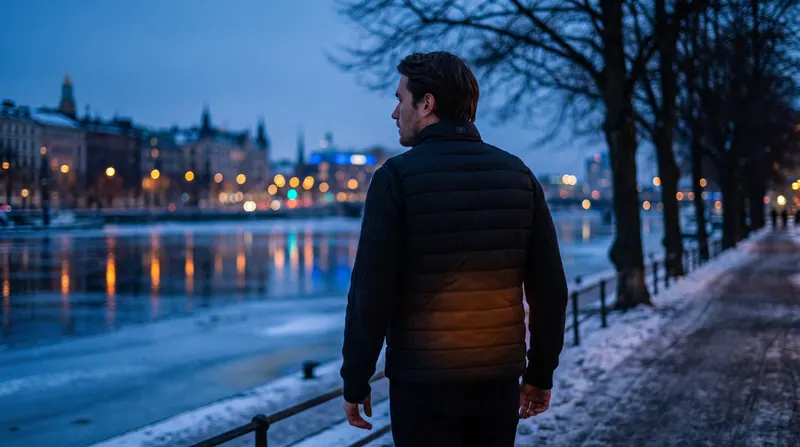
- Core: A heated vest under your own jacket is the most flexible option. A heated jacket makes sense when you want weather protection and heat in one layer.
The Warmth Finder above does the math for your situation: it uses the wind chill formula for the feels-like temperature and weights it by how much you move.
Heated clothing at a glance: what's out there
The ranges below come from our comparisons and cover models sold in the U.S. Every number is a manufacturer spec. Runtimes are for the lowest setting unless stated otherwise.
| Category | Price range | Runtime on low | Runtime on high |
|---|---|---|---|
| Heated gloves | $169.99 to $549.99 | 7 to 13 hrs | 2 to 4 hrs |
| Heated socks | $129.99 to $219.99 | 10 to 13 hrs | 3 to 5 hrs |
| Heated insoles | $149.99 to $169.99 | 7 to 24 hrs | about 3 hrs |
| Heated vests | $199.99 to $229.99 | 6 to 9.5 hrs | about 2 hrs |
| Heated jackets | $199.99 to $299.99 | 6 to 20 hrs | 2 to 3.5 hrs |
| Rechargeable hand warmers | $24.99 to $159.99 | 6 to 18 hrs | 4 to 6 hrs |
A few brands don't publish prices on their own sites – Milwaukee and DeWalt among them – so those models aren't in the price ranges.
Do heated jackets really work?
Yes – within limits. A heated jacket adds real heat to your core, and a warm core keeps blood flowing to your hands and feet. What it can't do is make up for a thin shell in a 30 mph wind or run on high all day. Most rechargeable heated jackets we track list 2 to 3.5 hours on high. On low, the numbers spread from 6 hours (ActionHeat Pro Series+ softshell) to up to 20 hours (Venustas W2168, with a 72 Wh battery).
A rechargeable heated jacket works best when you're mostly still: bleachers, a job site with lots of standing, a long commute on a train platform. When you're moving hard – skiing, shoveling, hiking uphill – your own body makes plenty of heat, and you'll likely switch the jacket off. For a lot of people, a heated vest under the jacket they already love is the better buy. Our heated jacket comparison lists runtime per level, heating zones and what's in the box for each model.
Heated clothing for women and men
Most heated gear comes in men's and women's cuts, and the specs can differ between the two. Check the version you're actually buying.
Heated clothing for women
In our data, women's models include the Ororo 5-Zone Classic Evo vest ($199.99, 7.5 / 4.5 / 2 hours), the ActionHeat Pro Series+ puffer vest ($229.99, 6 / 3 / 2 hours with a 10,000 mAh power bank), the Fieldsheer Outrider jacket ($229.99, 9+ hours on low, 2+ on high) and the Venustas W2168 jacket ($239.99, up to 20 hours). DeWalt sells a women's 20V MAX softshell kit, but lists no price on its own page. Look for a cut that sits close to the body – heat only helps when the panel touches your base layer.
Heated clothing for men
For men, the list includes the Ororo Overland 7-zone jacket with a detachable heated hood ($299.99), the ActionHeat Pro Series+ softshell ($249.99), the Fieldsheer Alpine 3.0 vest ($199.99), the Gerbing Khione puffer vest ($199.99) and the Venustas M2118 vest ($199.99, up to 9.5 hours). Milwaukee's M12 AXIS jacket is covered below.
The battery decides
Almost every box says “up to 8 hours” or “up to 10 hours.” That almost always means the lowest setting, measured at room temperature. On high you're often looking at two to three hours. And lithium batteries deliver noticeably less energy in freezing temperatures.
The honest way to compare batteries is energy in watt-hours: volts × amp-hours. A 7.4V, 2,000 mAh battery holds 7.4 × 2 = 14.8 Wh. More on the math, spare batteries and power-bank systems in our heated clothing battery life guide.
That's why our comparisons list runtime per heat level, exactly as the manufacturer states it – and the Warmth Finder takes 25 % off below freezing.
Brand battery pack, power bank or tool battery
Heated clothing gets its power one of four ways:
- Brand battery pack: the default for gloves, socks, vests and jackets. It usually fits only that brand, sometimes only that product line. Ororo's PD 5K pack, for example, is listed at 37.5 Wh.
- USB power bank: some vests and jackets run off a standard USB power bank. ActionHeat ships a 10,000 mAh power bank with its Pro Series+ vests and jackets. Bonus: the same pack can top off your phone. Downside: USB can cap how much heat the garment gets.
- Tool battery: Milwaukee and DeWalt build heated jackets and vests around their cordless tool batteries. If your truck is already full of M12 or 20V MAX packs, you skip buying a separate battery.
- Vehicle power: motorcycle gear like Gerbing's 12V line plugs into your bike. No battery to run down – but the harness and controller are often sold separately.
Heated clothing brands: what the specs show
There's no single best brand of heated clothing. Each brand is strong in some categories and weak in others, and all of them publish their own numbers. Here's how the two brands shoppers search for most stack up in our data.
Ororo
Ororo is the heated-apparel brand U.S. shoppers search for most. In our data, it lists runtime per heat level on every jacket and vest we track. The men's Overland 7-zone jacket costs $299.99 and comes with a detachable heated hood, dual controls (body and arms) and a 7.4V, 5,075 mAh battery. Ororo lists 8.5 hours on low, 5 on medium and 3 on high with all zones on. The Toasty 5-zone hoodie runs $199.99 with 9.5 / 5.5 / 3.5 hours. The women's 5-Zone Classic Evo vest costs $199.99 with 7.5 / 4.5 / 2 hours on the PD 5K battery.
Catch: the Classic Evo page contradicts itself – its FAQ lists 2.5 / 5 / 8 hours, which appears to describe a different battery version. The Overland weighs 890 g (about 2 lb) in the listed size. Ororo's Glasgow heated liner gloves showed up only in the EU shop during our check; the U.S. store was unreachable that day.
Milwaukee
Milwaukee builds heated gear for the job site and runs it on the M12 tool platform. The M12 Heated AXIS Quilted Jacket kit (M102B-21) comes with an M12 REDLITHIUM CP3.0 battery and a charger. Milwaukee lists 12 hours on low, 6 on medium and 3 on high, with three zones across chest, back and shoulders. The jacket is washer- and dryer-safe. The women's version lists the same runtimes. Milwaukee's M700B heated winter gloves list 8 / 4 / 2 hours on a 2,000 mAh battery.
Catch: Milwaukee doesn't publish prices on its own product pages – you'll only find them at retailers. And the M700B gloves don't take M12 packs; they need Milwaukee's separate Heated Gloves 2Ah battery.
Other brands in our comparison
We also track ActionHeat, Fieldsheer (Mobile Warming), Gerbing, Savior Heat, Venustas, Seirus, Ocoopa and Zippo, among others. Brands like Carhartt or 32 Degrees aren't in our data yet, so we don't rate them.
Best heated vest: how to pick one
There's no universal best heated vest, but there's a best one for your day. Compare these four things, in this order:
- Runtime on the level you'll use. The U.S. vests we track list 6 to 9.5 hours on low and about 2 hours on high.
- Battery energy in watt-hours. Ororo lists 37.5 Wh for its PD 5K pack, Venustas 36 Wh for the M2118, Gerbing 25.16 Wh for the Khione.
- Heating zones. Collar and hand-pocket zones matter on a cold commute. Chest and back zones matter under a work jacket.
- Fit and washing. A vest has to sit close to your base layer. Most can go in the washer with the battery removed.
The full list with sortable specs is in our heated vest comparison.
How we compare
We haven't hands-on tested heated clothing, and we don't pretend to. Every number on this site comes from the manufacturer's own page, with a source and a retrieval date. When a manufacturer contradicts itself – two different runtimes on the same product page, for example – we say so. When the battery isn't included in the price, we say that too.
We earn money through affiliate links. If you buy through one, we may earn a commission at no extra cost to you. Placements can't be bought. Details on how we compare.
Frequently asked questions
Is heated clothing worth it?
Yes, if you spend long stretches outside without moving much: hunting, ice fishing, football games, holiday markets, motorcycling, outdoor work. For skiing or winter hiking, good insulation is often enough – heated gloves or socks mostly help on the chairlift.
Is it safe to wear heated clothing?
For most people, yes. The heating elements run on low voltage – around 5 to 12 volts, up to 18V/20V on tool-battery gear. Manufacturers typically list maximum temperatures between about 113 and 150 °F (45–66 °C) on high. Use the original battery and charger, don't use a damaged pack, and turn the heat down if it gets too warm. If you have reduced feeling in your hands or feet, for example from diabetes, ask your doctor first.
What is the best brand of heated clothing?
There isn't one best brand for everything. Ororo lists runtime per level on most of its jackets and vests, Milwaukee makes sense if you already own M12 batteries, and ActionHeat and Savior Heat list some of the hottest high settings on gloves. Pick the brand whose model fits your use, not the logo.
Can you wash heated clothing?
Most vests, jackets and socks, yes – with the battery removed, often on a gentle cycle, and in the dryer only if the brand says so. Manufacturer-by-manufacturer details are in our guide on how to wash a heated vest.
Can you take heated clothing on a plane?
The clothing, yes – the battery only in your carry-on. Lithium batteries are limited by watt-hours. How to check yours: heated clothing on planes.
Can I use any battery pack or power bank?
Only if the manufacturer allows it. Gear built for USB power banks works with packs that meet the brand's specs. Gear with a 7.4V brand battery or a tool battery won't run on a regular power bank.
What helps with constantly cold hands?
Gloves whose heating reaches the fingertips, or thin heated glove liners. If you have Raynaud's, get the cause checked by a doctor. What to look for: gloves for Raynaud's.